Korean Tofu Bibimbap
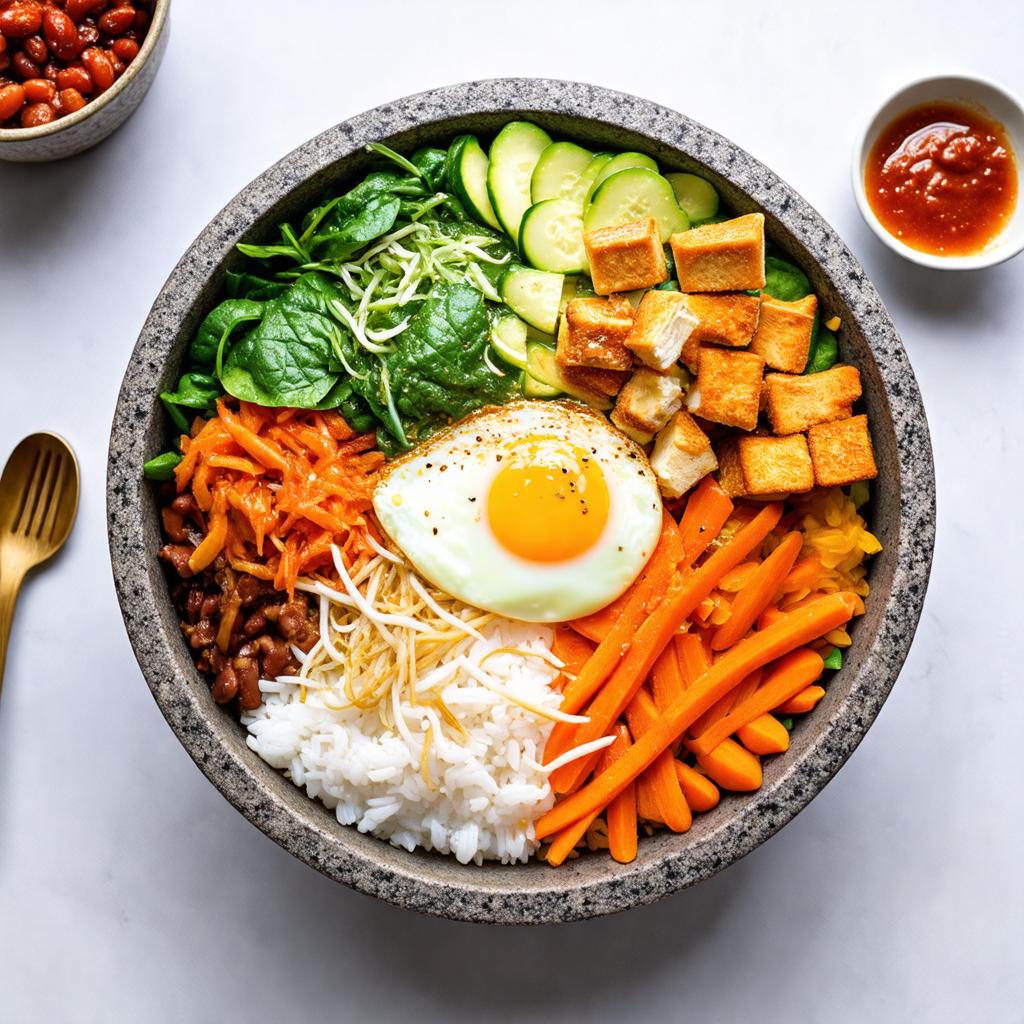
Gochujang-marinated tofu served over rice with sauteed vegetables, kimchi, and a fried egg on top, a vibrant Korean rice bowl that doubles as perfect meal prep.
Bibimbap is one of the best meal prep formats out there, and once you realize that, it changes how you approach cooking for the week. Every component, the tofu, the spinach, the bean sprouts, the carrots, the zucchini, cooks separately and keeps perfectly in the fridge for four or five days. Sunday afternoon, put on a podcast, knock out all the components in about an hour, and you've got lunches handled for the entire week. Just assemble a bowl, fry an egg, and you're eating in five minutes.
The gochujang marinade on the tofu is what takes this from a basic rice bowl to something you actually crave. Gochujang is this incredible Korean fermented chili paste. It's sweet, funky, spicy, and savory all at once. Marinating the tofu in it before pan-frying creates this caramelized crust that's almost impossible to stop eating. And gochujang adds real heat, which is a bonus. Some research suggests capsaicin can help reduce post-workout inflammation, so there's that little extra benefit on top of the flavor.
The fried egg on top is a must. When you break that runny yolk and it mixes with the gochujang sauce and the warm rice, that's the moment. Every bite after that is a slightly different combination of vegetables, crispy tofu, and egg. It never gets boring. This bowl hits 28g protein without even trying hard, and it tastes like something you'd pay $18 for at a trendy Korean restaurant.
The Protein Upgrade
A standard vegetarian bibimbap relies on vegetables and a small amount of tofu, typically hitting around 12-15g protein per serving. We use a full 21oz of gochujang-marinated tofu and add a fried egg on top of each bowl, pushing the protein to 28g per serving, nearly double, while keeping the dish authentically Korean.
Korean Tofu Bibimbap
Ingredients
- 21 oz extra-firm tofu (pressed and sliced into 1/2-inch thick rectangles) 26g protein
- 3 tbsp gochujang (divided, 2 tbsp for marinade, 1 tbsp for sauce)
- 2 tbsp soy sauce (divided)
- 1 tbsp sesame oil (plus more for vegetables)
- 1 tsp sugar
- 4 large eggs 6g protein
- 4 cups cooked short-grain rice 4g protein
- 6 oz fresh spinach (blanched and squeezed dry)
- 1 cup bean sprouts (blanched)
- 2 medium carrots (julienned)
- 1 medium zucchini (julienned)
- ½ cup kimchi
- 2 cloves garlic (minced)
- 2 tbsp vegetable oil (divided)
- 1 tbsp rice vinegar
- 1 tbsp sesame seeds (for garnish)
Instructions
- Mix the marinade: 2 tbsp gochujang, 1 tbsp soy sauce, 1 tbsp sesame oil, and sugar. Coat the pressed tofu slices and let marinate for at least 15 minutes (or up to overnight in the fridge).
- Prepare the vegetables: Blanch the spinach in boiling water for 30 seconds, drain, squeeze out excess water, and season with a dash of sesame oil and a pinch of salt. Blanch bean sprouts for 1 minute, drain, and season the same way.
- Sauté the carrots in a splash of sesame oil over medium-high heat for 2 minutes until just tender. Season with a pinch of salt. Repeat with the zucchini. Set each vegetable aside separately.
- Heat 1 tbsp vegetable oil in a large skillet over medium-high heat. Pan-fry the marinated tofu for 3-4 minutes per side until caramelized and slightly charred on the edges. Remove and slice into bite-sized pieces.
- Make the bibimbap sauce: Stir together the remaining 1 tbsp gochujang, 1 tbsp soy sauce, 1 tbsp rice vinegar, and 1 tsp sesame oil.
- Fry the eggs: Wipe the skillet, add 1 tbsp vegetable oil over medium heat, and fry the 4 eggs sunny-side up until the whites are set but the yolks are still runny.
- Assemble the bowls: Divide the rice among 4 bowls. Arrange the tofu, spinach, bean sprouts, carrots, zucchini, and kimchi in sections on top of the rice.
- Place a fried egg on top of each bowl. Drizzle with the bibimbap sauce and sprinkle with sesame seeds. Mix everything together before eating.
Boost Your Protein
- Use quinoa instead of rice for an extra 4g protein per serving.
- Add 1/4 cup shelled edamame to each bowl for an extra 4g protein.
- Double the egg, use 2 per bowl for an extra 6g protein per serving.
Ingredient Substitutions
- No gochujang? Use sriracha mixed with a little miso paste.
- No kimchi? Use quick-pickled cabbage with rice vinegar and chili flakes.
- Swap short-grain rice for cauliflower rice to make it lower carb.
- No bean sprouts? Use shredded cabbage or julienned daikon.